Can Europe “Fight Tonight”? Dr. Claudia Major on Preparing for a Hostile US and Closing the Deterrence Gap
Rostyslav Kasyanenko, Photo by author; picture alliance/HMB Medi | Понеділок, 23 листопада 2026, 10:47
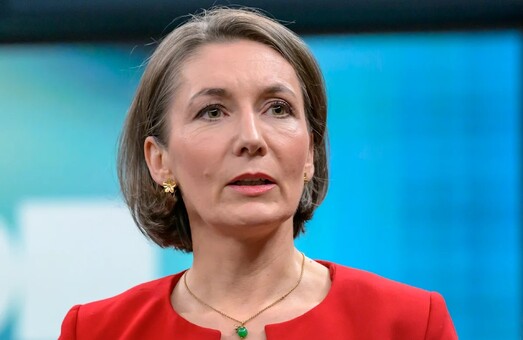
Europe can no longer afford to wait for the "good old" transatlantic days to return and must actively prepare for scenarios in which the United States becomes unreliable—or even openly hostile. This stark warning was delivered by Dr. Claudia Major, Senior Vice President for Transatlantic Security and Director of the Berlin Office at the German Marshall Fund (GMF), during her address at the Berlin Freedom Conference.
Eroding Trust and the "Deterrence Gap"
Opening her remarks, Major pointed to a fundamental shift in transatlantic relations: Washington and European capitals no longer view global threats through the same lens. According to the German defense expert, shared security guarantees are impossible without a shared perception of danger.
"Allies and Europeans are often criticized for not acting in the right way according to American preferences. If you do not share the same threat perception, and if you do not agree that Russia is an existential threat, why would you defend allies?" Major asked.
She noted that recent rhetoric from President Donald Trump has severely shaken European confidence in US security commitments, citing his dismissal of Spain as a "waste case"—alongside doubts over whether Washington would defend Madrid—as well as his verbal attacks on Denmark regarding Greenland’s sovereignty and territorial integrity.
In Major’s view, this shift is equally visible in Washington’s approach to the Russia-Ukraine war. "In the Russia-Ukraine war, the US seems to no longer support Ukraine, shifting from a supporter of Ukraine to a moderator—and sometimes one wonders whether not a supporter of Russia," she observed.
As a result, European nations are increasingly questioning whether they can still rely on American protection. This uncertainty, Major warned, has created what she terms a "deterrence gap"—a dangerous divide between what Europe wants to protect and what it is actually capable of defending on its own. "If Russia assesses that the US might not come, it might be tempted to attempt an attack on Europe. Europeans are slowly learning this lesson," the expert stressed.
Three Scenarios for a Post-Transatlantic Era
According to Major, European leaders have finally abandoned hopes that traditional transatlantic ties will simply bounce back, and are now forced to manage a difficult strategic transition. To navigate this new reality, she argued, Europe must build contingency plans for three potential versions of the United States:
- An orderly partner that continues to coordinate predictably with European allies;
- An unreliable presence that remains stationed in Europe but cannot be counted on in a crisis;
- A hostile actor that actively turns against European interests.
"Europeans must prepare for all three scenarios and improve their capacity to act," Major emphasized.
Five Pillars Where Europe Must Replace the US
While Europe possesses the financial wealth and population base required for self-defense, Major pointed out that it still suffers from acute deficits in military capabilities, industrial scale, and political leadership. Breaking down the role the US has historically played in European security, the GMF Vice President highlighted five critical areas where Europe must urgently step up:
- Political Leadership: Major described this as the ability to "keep the house together, forge compromises, put initiatives on the table, and unite all Allies behind one overarching goal." With Washington stepping back from this role, she noted, "someone else must now step in."
- Conventional Mass: Without American troops, Major warned, "Europe struggles, as it lacks the high number of forces required by NATO defense plans."
- Critical Enablers: These include high-end assets such as targeting, air and missile defense, cyber operations, logistics, and deep precision strikes capable of hitting targets far behind Russian lines. "Europeans are currently building up these assets, but at present, they possess neither the quantity nor the quality required," she stated.
- Nuclear Deterrence: Europe’s ultimate strategic umbrella, she noted, remains "largely provided by the United States."
- Industrial Capacities: Europe’s defense manufacturing sector still lacks the scale needed for sustained deterrence.
Solving the Leadership Crisis: Enter the E3 and E5
Although Europe must do significantly more across all five baskets, Major believes the deepest bottleneck is political rather than financial. "The real question is who leads, and which group of countries can act within NATO or within Europe to make decisive choices when Washington stays out," she explained.
To overcome slow consensus-building in larger institutions, the expert expects European defense to rely increasingly on agile, smaller leadership coalitions—specifically pointing to the E3 (France, Germany, and the United Kingdom) or the E5 (France, Germany, the United Kingdom, Italy, and Poland). "I believe smaller leadership formats are essential to bring all of Europe together," Major argued.
The Verdict: Learning to "Fight Tonight"
Summing up Europe’s immediate to-do list, Major called on governments to close capability gaps, build conventional mass, expand defense production, make NATO genuinely more European, and stop postponing tough political decisions. Crucially, she urged leaders not to treat defense readiness as a distant goal for the next decade.
"Europe must plan for how to defend itself today with what it actually possesses, rather than solely targeting some distant future date. The military calls this 'fight tonight'—being ready to defend what we have built in Europe whenever necessary, even tonight," Major said.
Ultimately, she concluded, Europeans must define their own "European way of deterrence, defense, and warfare"—how the continent would defend itself entirely on its own. Answering the central question of whether Europe can defend itself without the United States, Major offered a clear verdict:
"Yes, Europe can defend itself without the US. The real question is whether it will decide in time to actually do so and step up."
Матеріали за темою:
23 листопада 2026
23 листопада 2026
22 листопада 2026
22 листопада 2026
20 листопада 2026
Wie eine Stadt Königen die Regeln diktierte: Neues Buch zum Stralsunder Frieden von 1370 vorgestellt
20 листопада 2026
comments powered by HyperComments