Kyiv's Winter Outlook: El Niño Climate Models vs. Left Bank Isolation
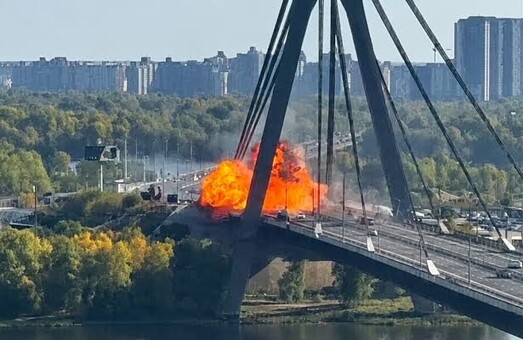
The rationale behind Russian strikes on Kyiv's bridges (see map) — initially targeting the Southern Bridge, and subsequently the North Bridge, which was hit precisely during German Chancellor Friedrich Merz's visit to Kyiv (see Top-photo) — is to isolate the Left Bank (located on the right side of the map), which is home to approximately 600,000 residents of the capital. Consequently, these residents now face significantly longer commutes — occasionally up to three or four hours — to reach their workplaces on the Right Bank.
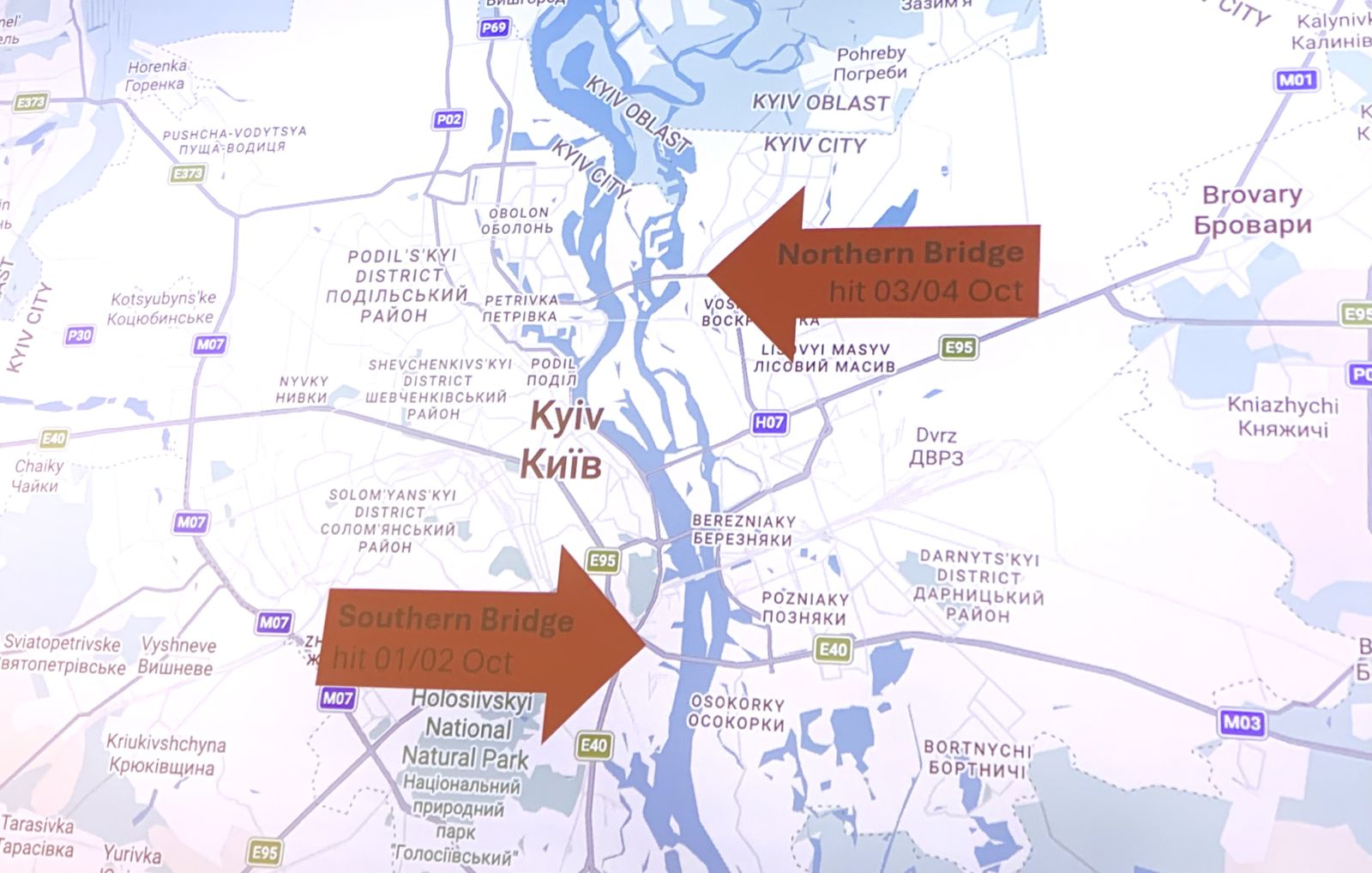
This disruption has prompted companies and universities to actively discuss whether it is time to evacuate personnel from the Left Bank, or perhaps from Kyiv entirely. However, the question of relocation destinations remains complex. Rental prices in Uzhhorod now substantially exceed those in Kyiv, driven by numerous institutions, seeking relocation sites for personnel who either feel unsafe or are simply unable to commute to their offices.
Today, there is every reason to expect a cold and dark winter. The memory of extensive power blackouts and living on strict electricity schedules remains fresh for everyone. This year, however, the heating crisis is even more acute, with 60% of generation capacity already out of commission and up to 80% of the infrastructure affected. Consequently, expectations for a milder season rest heavily upon El Niño climate patterns [when the ocean warming phase peaks, leading to a mild winter in Europe].
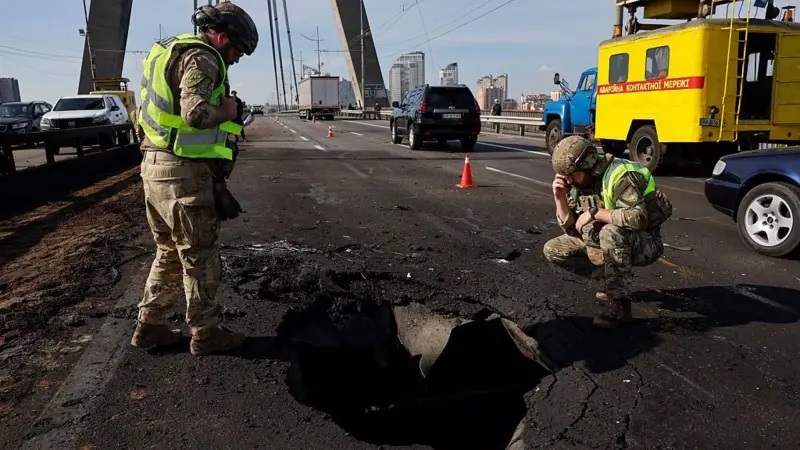
Source: AFP/Getty Images
However, a new threat has now emerged: the Russians may consider attempting to flood the Left Bank by destroying portions of the dams or riverbanks that prevent water from inundating its low-lying areas. While strikes on the water and sanitation supply would be significantly more critical for the Left Bank, they would nonetheless pose a massive challenge for Kyiv as a whole.
The primary source of this pressure is the mass deployment of new jet-powered Shahed drones. A near-continuous presence of at least one UAV over Kyiv or its outskirts triggers frequent air raid alerts. These drones feature real-time guidance systems, making them reactive and capable of mid-flight redirection; as a result, they bypass predictable straight-line trajectories, complicating strike-point forecasting. Furthermore, because they fly significantly faster than the previous iteration of the Geran drones, Ukraine's existing mobile interception systems simply cannot match their speed to engage them successfully.
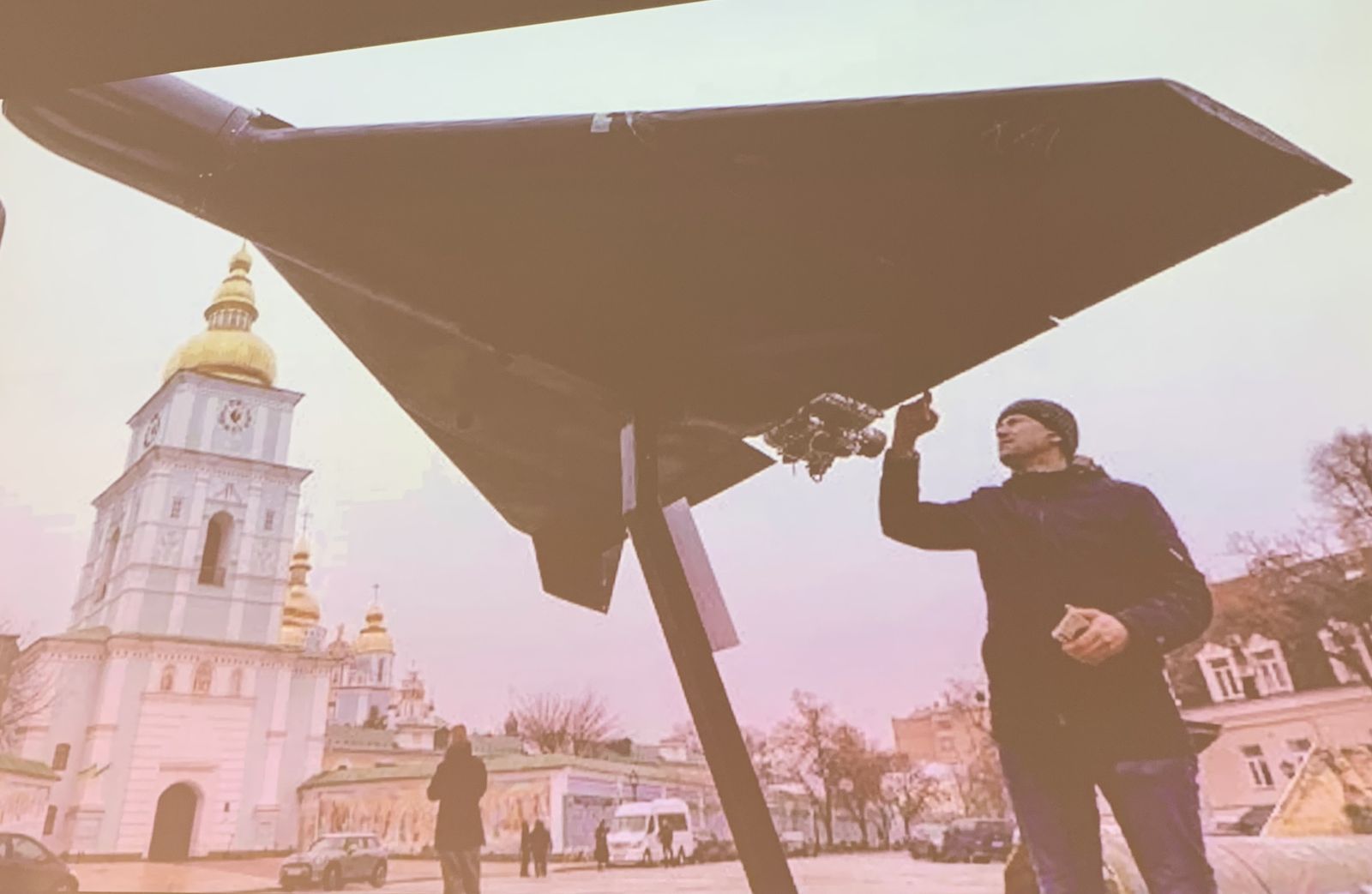
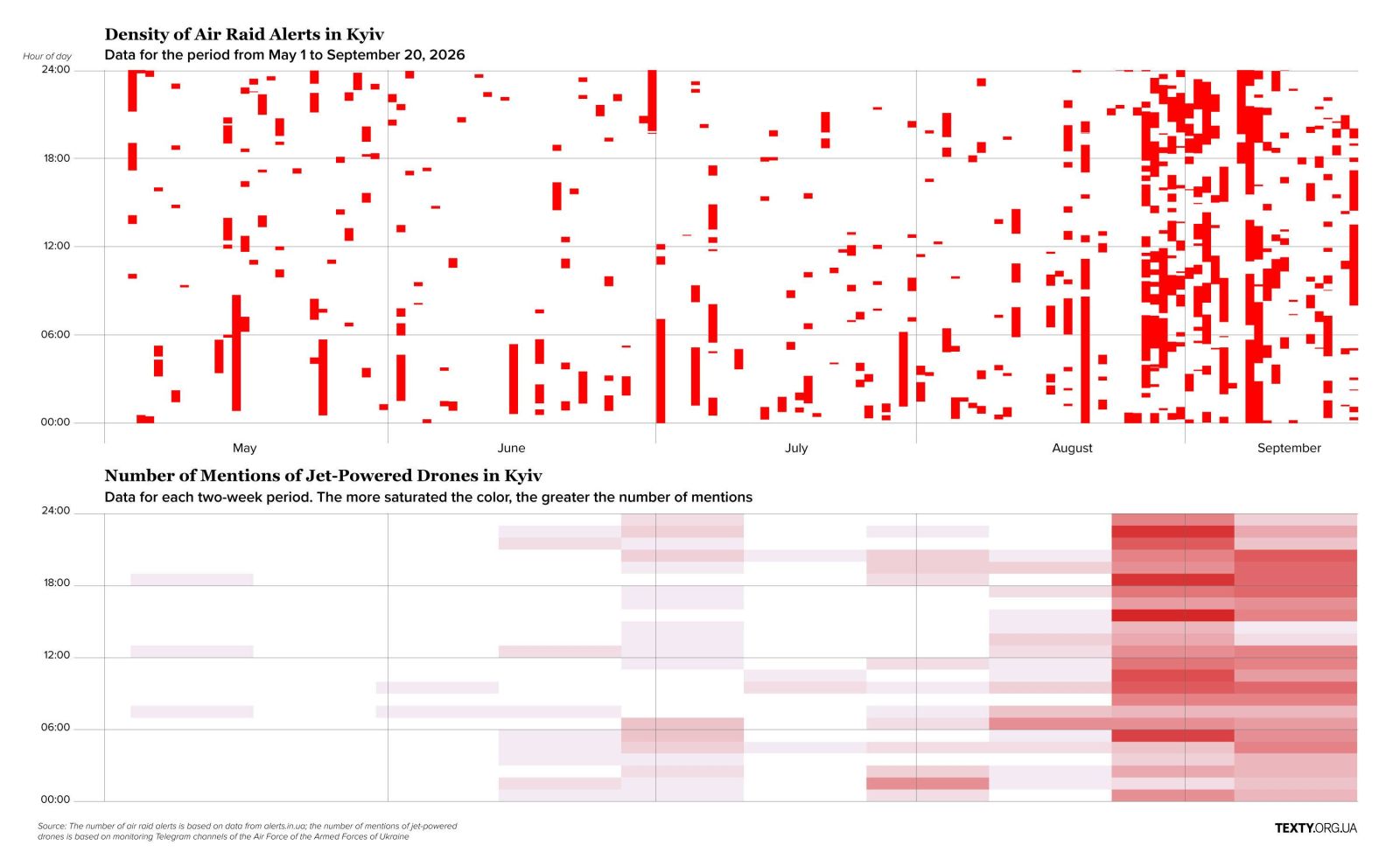
Consequently, the interception rate has plummeted to approximately 55%, down from a previous average of around 90%. While improved interceptors are expected, financing and scaling challenges within new domestic defense production mean these systems will likely not be ready for mass deployment until later in the season. The tangible impact of this shifting dynamic is evident in the density of air raid alerts in Kyiv. The accompanying chart illustrates the cumulative duration residents spend under alert conditions, highlighting a stark, multi-fold increase in intensity since mid-August.
This relentless disruption has forced a widespread transition to online and hybrid learning models. At our Kyiv School of Economics (KSE), mirroring the broader academic sector, we have implemented a hybrid format for those who feel unsafe attending in person. To maintain academic continuity amid near-constant alerts, virtually all of our lectures have been relocated to underground basement classrooms, bypassing the disruptive cycle of evacuating up and down throughout the day.
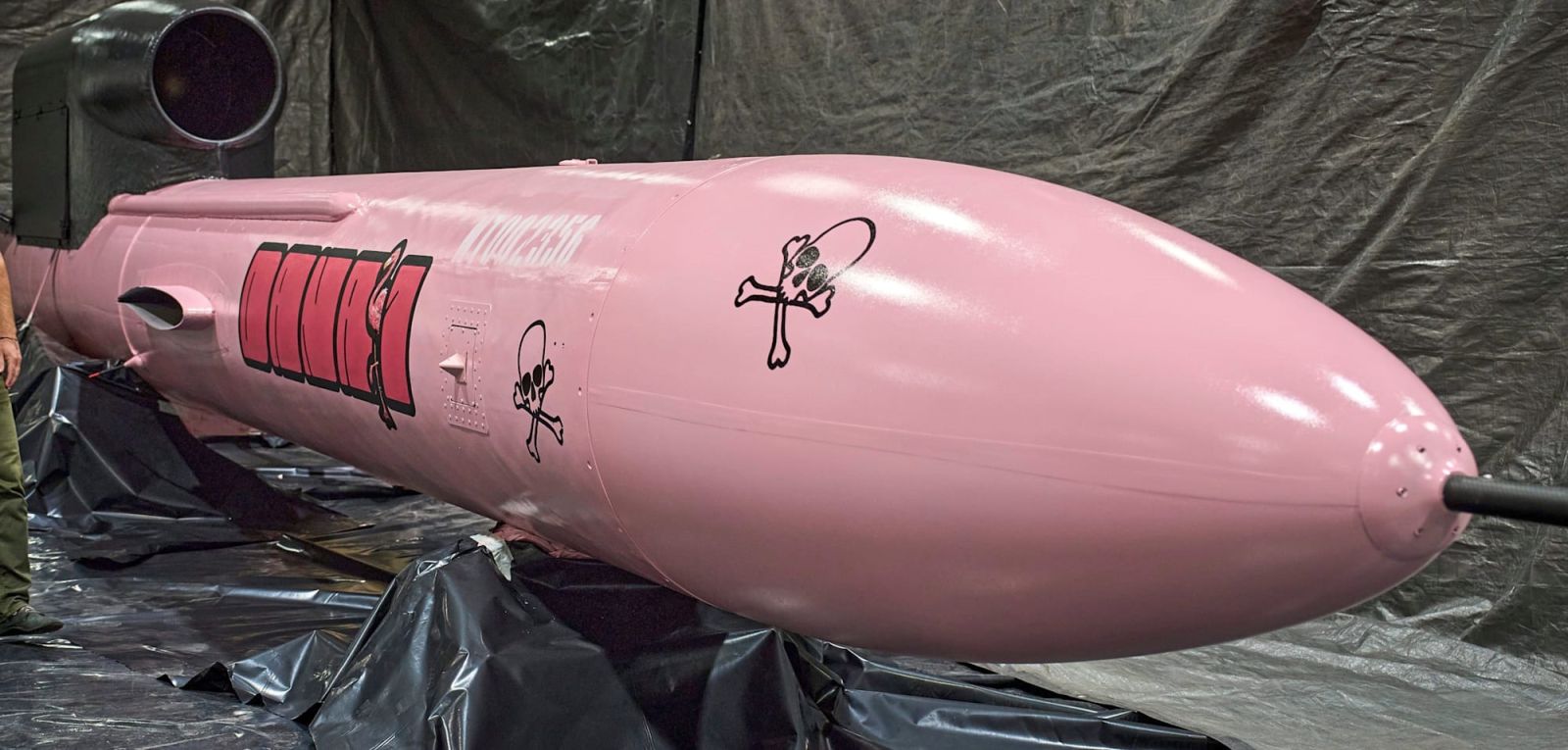
Yet, Ukraine’s posture is far from passive. While the defense sector actively scales up its technological and tactical responses to these shifting threats, the ongoing development of domestic capabilities provides a crucial anchor for resilience — as vividly demonstrated by the manufacturers' test launches of Ukrainian ballistic missiles (see photo below).
Material for the column: Briefing "Frontline and Future: Ukraine Heading into Winter," October 8, 2026.